Thursday, March 31, 2016

Peer Editing

Please share your draft with a classmate.

Using the handout, read your classmate's draft and offer feedback on the four criteria for strong body paragraphs. While you need not cover every checkpoint (there are 22 of them, after all), please do use them to focus your feedback.

HW: Apply at least one suggestion to your draft.


Some inspiration from writer Anne Lamott...

"Thirty years ago my older brother, who was ten years old at the time, was trying to get a report on birds written that he'd had three months to write. It was due the next day. We were out at our family cabin in Bolinas, and he was at the kitchen table close to tears, surrounded by binder paper and pencils and unopened books on birds, immobilized by the hugeness of the task ahead. Then my father sat down beside him, put his arm around my brother's shoulder, and said, 'Bird by bird, buddy. Just take it bird by bird.'" 
-Anne Lamott, Bird by Bird: Some Instructions on Writing and Life

Please heed the checkpoints on our thesis calendar. They're there so that you don't become "immobilized by the hugeness of the task ahead." Follow Lamott's father's advice and "take it bird by bird." That might mean a paragraph a day or every other day. It might mean sentence by sentence. Find a routine that works best for you and stick to it. 

Tuesday, March 29, 2016

Drafting Continued

We're getting there!
Do Now: What are three words that best capture the topic of your thesis paper? How might you use this information to help generate a hook or title for the piece?

Please choose a focus for today's lab time: drafting body paragraphs; drafting an introduction; drafting transition paragraphs between big ideas; drafting a conclusion; revising body paragraphs.

HW: Rough draft due 3/31. Make sure you've shared it with me (mreynolds@belmontschools.net)!

Monday, March 28, 2016

Introductions and Conclusions

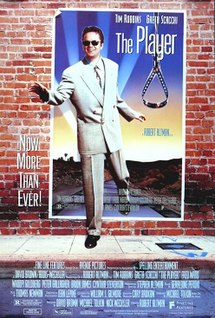
Do Now: Watch the opening shot from Robert Altman's The Player and notice how the screenwriters pitch their movie ideas. If you had to "pitch" your thesis to someone, what information would you include?

1. Introductions and Conclusions
2. Drafting Continued
3. Exit Ticket: Thinking back to my "pitch," I could introduce my essay with...

HW: Keep drafting! The full draft should be ready for peer review on 3/31.

Thursday, March 24, 2016

Focused Revisions

Image result for rita dove on revision

Please use today's lab time to either pare down a lengthy paragraph or draft a transition between big idea sections (i.e., signposting). If you decide to work on the former, then look over the "Control Paragraph Length" handout and try at least one of the strategies there. If you choose to work on the latter, then consult the "Topic Sentences and Signposting" handout for a model transition paragraph.

HW: Continue drafting!

Tuesday, March 22, 2016

Topic Sentences and Signposting

Do Now: Look at the topic sentences in your draft-in-progress. Do they "argue rather than report" what the reader can expect to follow in the paragraph? Mark those that do not.

1. Topic Sentences and Signposting
2. Revising and/or Continuing to Draft

HW: Please add at least two paragraphs by Thursday (rough draft due 31 March)

"If the same idea can be expressed in a simple way or in a complex way, the simple way is better - and, paradoxically, it will typically lead readers to conclude that the writer is smarter." -Bryan Garner, A Dictionary of Modern American Usage

Monday, March 21, 2016

Revising


Do Now: Please open your half-draft and count up the paragraphs. On a separate sheet of paper, list the number of paragraphs and leave some space between each number.

1. Turn to your paper, read the first paragraph, and write on your list the main point you make in this paragraph. A word of phrase will do here. (n.b., If you can’t summarize the content of a paragraph, you probably have multiple ideas in play in that paragraph that may need revising; note each of the ideas expressed in the paragraph.)

2. Do the same for each paragraph of your paper in turn.

3. Now focus on your list (which reflects the direction of your paragraphs!)
     a. How well does the list cohere?
     b. How does one idea connect to the next?
     c. Are the connections between ideas made explicit in your writing?

4. Use your notes to do four things:
i. See whether each paragraph plays a role in supporting your thesis.
ii. What needs to be revised – your thesis? Or the order of the points in your argument?
iii. Look for unnecessary repetition of ideas.
iv. Compare your notes with your half-draft to see whether the sentences in each paragraph are related to the main point of that paragraph, per the notes you've taken.

"Revision Activities." Vanderbilt.edu. Vanderbilt U, n.d. Web. 20 March 2016.

HW: Add at least one more paragraph to your draft.

Tuesday, March 15, 2016

Paragraphs

Do Now: Please read Clark's chapter on varying the lengths of paragraphs. What is one useful idea from the piece?

1. Paragraph Exercises
     A. Try the first "Workshop" exercise with Fadiman's paragraph.
     B. Read the three paragraphs introducing Virginia Woolf's A Room of One's Own. Discuss the author's purpose with a friend.
     C. Try the second "Workshop" exercise with the paragraph you drafted for today.
2. Finishing slideshows and drafting more paragraphs
3. Exit Ticket: One takeaway I have about the paragraph is...

HW: Add at least one paragraph to your half-draft.